Commercial Waste in Grays for regular collections and one-off clearances
Commercial waste in Grays needs a practical service that can handle everyday business refuse, bulky items, and cleared-out materials without turning routine operations into a mess. We provide commercial waste removal focused on keeping premises clear, helping organisations manage waste streams sensibly, and arranging disposal in a way that suits the type of waste involved. The service covers common business waste, heavier mixed loads, and planned clearances where rubbish has built up over time.
For many premises, the most useful approach is a regular removal plan that sits alongside day-to-day trading, while others need a one-off collection after refurbishment, relocation, or a change of use. Commercial premises often generate a mix of packaging, office items, shelving, fixtures, and general non-hazardous waste, so the right collection has to be flexible. We work with those practical requirements rather than forcing everything into one rigid pattern.
If you are comparing options, start with the waste type, the amount to be removed, and how access works on site. Then ask for a quotation that reflects the actual job rather than a guess. You can also make a quick initial enquiry by sending the main details in plain language and asking what collection approach would suit the load best.
Business waste removal for offices, shops and workplaces
Business waste removal usually needs a service that is straightforward, discreet, and easy to fit around working hours. Offices may need desks, chairs, filing items, and packaging removed, while shops and customer-facing premises often want back-of-house waste cleared without blocking the trading area. Our commercial waste service is designed to deal with those everyday pressures and keep waste from becoming an obstacle.
Where the waste is largely routine, the main decisions are usually about collection size, access, and whether the material is suited to simple disposal or needs sorting first. Some loads contain a mixture of recyclable items and general rubbish, so separating those materials before collection can make the overall process cleaner and easier to manage. A sensible approach also reduces the chance of leaving useful items mixed in with waste.
What the service can cover
The exact load can vary from site to site, but business waste removal commonly includes cardboard, packaging, bagged refuse, office furniture, loose fixtures, and surplus stored items. Business waste removal is often the best fit when a workplace wants a general solution for non-hazardous commercial waste that no longer needs to stay on site.
Clearances for offices, stockrooms and back-of-house areas

Some jobs are not simply about emptying a bin area. They are about clearing a room, a storage section, or an entire back-of-house space so it can be used properly again. That may involve old files, redundant display fittings, broken furniture, packaging materials, archived stock, and general items that have gradually built up. Planning the removal by area can make large clearances more manageable.
When a workplace needs a broader tidy-out, it helps to think about what should stay, what can be re-used elsewhere, and what has reached the end of its life. A clear separation between those groups often saves time on the day and avoids confusion once the collection begins. If the waste is spread across several rooms, noting the main access points and any heavy or awkward items is useful when requesting a quotation.
For larger commercial clearances, the important issue is not only how much is removed, but also how the work is organised. Materials that can be gathered together in advance are usually easier to handle, while items that need careful lifting or disassembly may shape the collection plan. A good enquiry should give enough detail for the load to be understood clearly.
Furniture, fixtures and bulky item disposal
Commercial premises often need help removing items that are too large for ordinary waste arrangements. This can include office desks, cupboards, shelving, reception furniture, storage units, and other bulky items that have become unwanted because they are damaged, outdated or simply no longer suitable. Furniture disposal for businesses is usually about making room efficiently while keeping the site safe and orderly.
Bulky items may need more careful handling than bagged waste, especially if they have to be lifted through narrow access points or removed from upper floors. In some cases, it makes sense to strip an item down into smaller parts before collection, although that depends on the material and how the site is arranged. Collections can also be planned around the order in which items are easiest to reach.
If you are dealing with a mixture of furniture and general rubbish, it is worth identifying which pieces are reusable, which are damaged beyond use, and which are simply being replaced during a fit-out or refit. That practical distinction helps the collection stay focused on the right items. For related bulky household-style items, see furniture disposal and, where broader contents need clearing, furniture clearance.
Waste from refits, refurbishments and strip-outs
Premises undergoing a refit often generate a very mixed load: old worktops, broken fittings, packaging, offcuts, loose materials, and unwanted furniture all tend to appear at once. Commercial waste removal in this setting needs enough flexibility to manage items that do not fit neatly into one category. The aim is to clear the site so the next stage of work can continue without avoidable clutter.
Refurbishment waste is rarely uniform, so it helps to think in terms of what is being removed rather than treating every item as the same. Some materials may be light but bulky, while others are compact yet heavy. If there are awkward objects, fixings, or components that need separating, it is useful to mention them in the enquiry. That allows the collection to be matched to the actual load.
Useful information to include in a quotation request
When asking for a quote, a few practical points are usually enough: the type of waste, estimated volume, access to the items, and whether the load includes heavy or unusual materials. If you can add whether the job is a one-off clearance or an ongoing arrangement, that also helps. A simple, focused description is usually more helpful than a long list of unrelated notes.
Recycling, sorting and responsible disposal
Responsible waste handling is often a matter of separating usable or recyclable material from general rubbish before the collection is completed. Commercial waste can include cardboard, plastics, metal, timber, office items and mixed refuse, and not everything should be treated in the same way. A thoughtful sorting process can make disposal cleaner and reduce unnecessary mixing of different waste types.
This service is best approached with a clear understanding of what is present on site. Some materials are straightforward, while others may need to be kept separate because they are not suitable for the same disposal route. If you are unsure about a specific item, describe it plainly when requesting a quotation rather than assuming it can be included with ordinary waste. That is especially important where the load is mixed and the collection needs to stay compliant with the waste type.
Recycling and sustainability explains the kind of sorting and recovery approach that can sit behind a well-run commercial waste service. For customers who simply want the job arranged clearly, the priority is to identify the load honestly and choose the service route that suits it best.
Pricing factors and how to prepare your enquiry
Commercial waste removal is usually priced around practical factors rather than one fixed figure. The size of the load, the type of material, access to the items, and whether the work involves bulky or difficult pieces can all affect the quotation. If the waste is spread over multiple rooms or includes items that need extra handling, it is sensible to mention that early so the estimate reflects the job properly.
A useful enquiry is usually brief but specific. Give the main waste type, where it is located, and whether the collection is a one-off or part of an ongoing need. If the site has stairs, narrow corridors, loading restrictions or other access considerations, include those as well. Two or three clear sentences are often enough to support an accurate quote without overcomplicating the request.
For a straightforward next step, you can ask for a commercial waste quotation in plain terms and let the service be matched to the load. If you need a point of reference for likely costs and service structure, pricing and quotes is a helpful place to look before you decide how to proceed.
Office waste, confidential material and routine collections
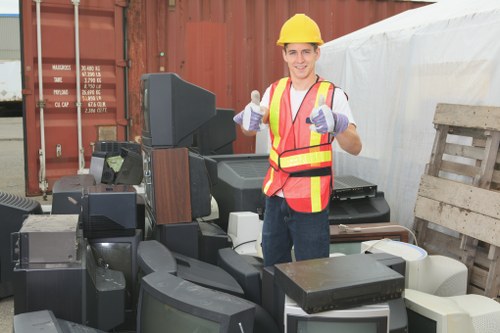
Office environments produce a constant flow of waste, from paper and packaging to broken equipment, worn seating and redundant storage items. A commercial waste service for offices needs to cover those ordinary but persistent jobs without disrupting daily work. Regular clear-outs are often the best way to keep shared areas, storerooms and service rooms under control.
Where paperwork is involved, offices may also need a way to separate ordinary waste from material that should be treated more carefully. That is not the same as every other office item, so it deserves specific attention. If documents, folders or records are being removed, they should be identified clearly in advance and kept distinct from general rubbish. Confidential shredding is relevant where secure paper disposal is needed alongside broader office clearance.
Routine collections are often easiest when the customer keeps a simple internal list of what is to go. It does not need to be complicated: just noting the main categories, the expected amount and any access issues gives a useful starting point. That keeps the enquiry accurate and helps the service fit around office activity rather than interrupting it.
Household-style clearances that overlap with business premises
Some commercial sites contain rooms or areas that behave more like domestic spaces than standard offices. Staff accommodation, inherited furniture, break rooms, storage cupboards and mixed-use premises can all generate waste that needs a broader clearance approach. In those situations, the right service is often the one that can deal with varied items in an orderly way rather than limiting the job to a single waste stream.
Loads of this kind may include wardrobes, chairs, small cabinets, appliances and general mixed contents, especially where a property is being emptied for reorganisation or change of use. The practical question is which items are staying, which are being reused, and which are ready for disposal. If the clearance includes fixtures or furniture as well as ordinary rubbish, it can be helpful to group those items before the collection date.
For related clearances beyond the commercial setting, home clearance, house clearance and flat clearance describe other property types that involve similar practical removal work. The differences lie in access, scale and the mix of items rather than in any dramatic change of principle.
About Grays
Grays is a town in Thurrock on the north side of the River Thames, with a location shaped by its river frontage, transport links and long association with wider industrial and commercial activity in the area. The town grew from earlier settlement patterns into a busy riverside centre, and its modern character reflects both older streets and later development. Grays Railway Station connects the town to London and Essex, while the road network has long supported movement along the Thames corridor. The town centre contains a mix of shops, services and civic buildings, giving it an everyday working character rather than a purely residential feel. Nearby green spaces and riverside stretches offer a contrast to the built-up centre, and the wider borough setting places Grays within a landscape that includes both urban neighbourhoods and open marshland. Grays Beach Riverside Park is one of the better-known local open spaces, while the Thames path and river edges provide a strong sense of place. The area also sits close to larger regeneration and port-related activity in the Thames Gateway, which has helped shape the town’s economic profile over time. Architecture in and around the centre ranges from practical commercial buildings to domestic streets and later developments, showing the town’s layered growth rather than a single period of building. As with many places in Essex that developed around transport and industry, Grays combines routine civic life, trade, movement and local community use in a compact and accessible setting.
Other clearance options for mixed sites and stored items
Not every commercial waste job is limited to the main workspace. Sometimes the items to remove are stored in lofts, garages, basements, outbuildings or side rooms that have been used for keeping surplus stock or old equipment. Those spaces can be awkward, dusty or crowded, so a clearance has to be planned with the layout in mind. The goal is to remove what is no longer needed without making the site harder to use than before.
Where the waste is tied to storage rather than day-to-day operations, there is often a strong case for sorting before collection. Keep useful items separate, identify anything fragile or unusually heavy, and note if the space includes access limitations. If the load is a mixture of stored goods and general rubbish, a focused description will usually produce a better response than a vague request. garage clearance and loft clearance are useful examples of the kind of space-specific service that can overlap with commercial waste work in mixed-use premises.
When the job is ready to be assessed, ask for a quotation that matches the type of waste and the practical conditions on site. If you want the work arranged with minimal back-and-forth, start with the main items, the location, and the access details, then let the collection be shaped around those facts. For a direct start, make your enquiry now and request a commercial waste quote for your Grays premises.