Insurance and Safety for Commercial Waste Grays — Insured Rubbish Company Standards
 Commercial Waste Grays operates to the highest standards expected of an insured rubbish company. We recognise that robust insurance cover and rigorous safety systems are essential for businesses choosing an insured waste removal company. This page outlines how public liability policies, comprehensive staff training, correct personal protective equipment (PPE) and a systematic risk assessment process combine to protect your property, the public and our workforce. Clear procedures and verified cover are the backbone of responsible waste management services.
Public Liability Insurance and Business Protection
Public liability insurance is the primary form of protection that customers seek from a reputable insured rubbish removal company. Public liability covers third-party injury and property damage that can arise from everyday operations — from collection to transport and disposal. An insured commercial waste company will hold appropriate limits, typically clearly documented on insurance certificates, and will maintain cover that aligns with contract values and regulatory expectations. Proof of cover is part of our standard pre-assignment checks.
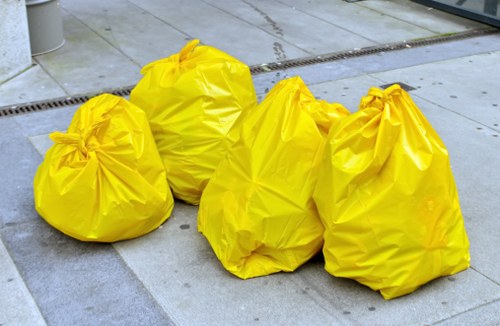 Holding valid insurance reduces disruption when incidents happen. If a spill, accidental damage or third-party injury occurs, an insured rubbish company will have mechanisms for rapid reporting, incident investigation and claims handling. That protects clients from unexpected liabilities and demonstrates the business has the resilience to operate commercially, safely and transparently.
Staff Training and Competence: The Human Element
Staff training is the most important control in an insured waste disposal company. We invest in competence through initial induction and continuing professional development. Training covers manual handling, safe loading and unloading, segregation of waste streams, hazardous waste awareness and vehicle-safe practices. Regular assessments ensure staff stay current with regulations and company policy. Trainers document progress and competency so every operative deployed on-site has verifiable qualifications.
 A structured training programme supports both safety and compliance. Typical elements include:
- Induction and site-specific briefings — ensuring every operative understands the customer environment;
- Certificated courses — such as driver CPC, manual handling, and confined space awareness where relevant;
- Toolbox talks and refresher sessions — to keep awareness high and address seasonal or project-specific risks.
These measures demonstrate how an insured rubbish disposal company reduces the likelihood of incidents and supports a defensible response if claims arise.
Personal Protective Equipment (PPE) is a visible, practical safeguard and a contractual expectation in any insured commercial waste company. PPE is not a substitute for safe systems, but it is essential for reducing harm when controls are breached. We supply and mandate appropriate PPE for roles including drivers, loaders and site operatives. Typical items include hi-visibility clothing, safety boots, cut-resistant gloves, eye protection and respiratory protection where dust or fumes may be present.
 Correct PPE policies include provisions for: regular inspection; documented issue records; replacement schedules; and training on correct fitting and maintenance. Supervisors check PPE compliance during shift start and while tasks are underway, ensuring that PPE is used consistently and correctly to minimise risk and limit potential insurance claims.
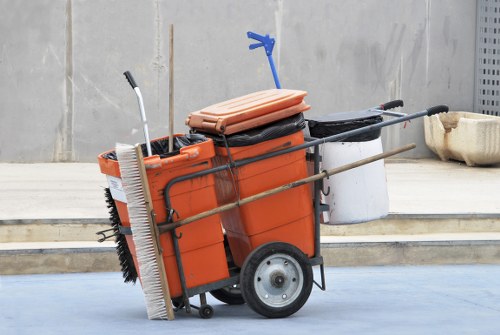 The risk assessment process ties together insurance, training and PPE by identifying hazards and setting out controls. A robust risk assessment for an insured rubbish company follows simple, repeatable steps: identify hazards; evaluate who could be harmed and how; implement control measures; record findings and assign responsibilities; and review the assessment after changes or incidents. Documented assessments form part of our standard work packs and are reviewed periodically and when sites or tasks change.
Practical controls identified in risk assessments might include segregation of waste streams, safe access for collection vehicles, traffic management on-site, bunding for potentially polluting loads and spill response procedures. These controls are reflected in client site rules and in the operational method statements provided by an insured rubbish company. Maintaining records of risk assessments and control checks helps insurers and clients see that the business is managing risk proactively.
Incident reporting and continuous improvement are essential. When a near-miss or incident happens, our insured waste removal company follows a clear investigation process: immediate safety actions; preservation of evidence; fact-gathering; root cause analysis; and corrective actions. Lessons learned feed into training updates and revisions to procedures, reducing repeat occurrences and supporting lower insurance claim frequency.
In summary, an insured rubbish company that combines comprehensive public liability insurance, disciplined staff training, mandated PPE and a systematic risk assessment process provides the reliability and protection commercial clients require. These elements work together to reduce exposure, accelerate response when events occur and demonstrate a proactive culture of safety and compliance in every contract we fulfil.
